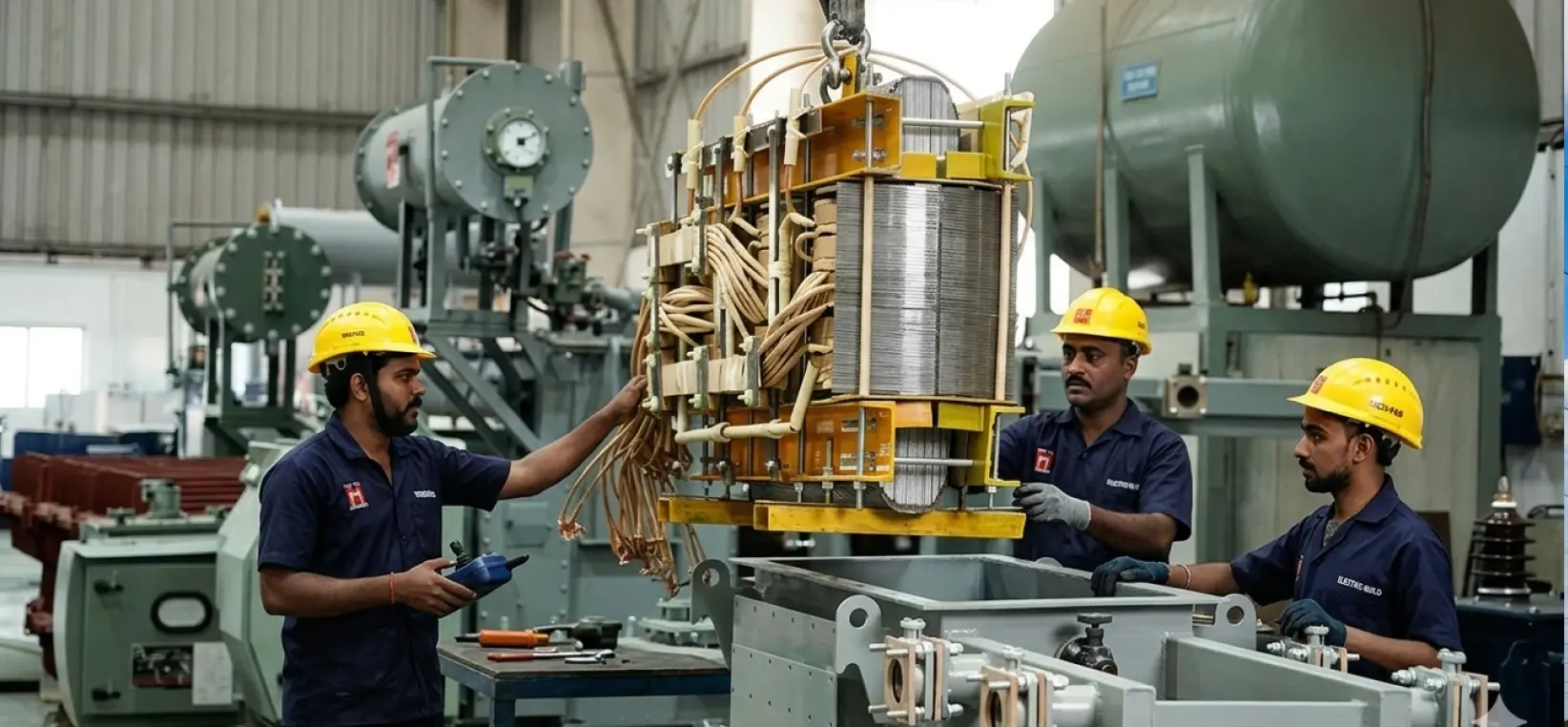
In an era dominated by advanced power electronics, transformers are sometimes viewed as legacy components, reliable but unremarkable. In reality, transformer design remains one of the most critical factors influencing the performance, efficiency, and reliability of modern power systems.
Far from being obsolete, transformers form the foundation upon which power electronics operate.
The misconception of commoditization
Transformers are often treated as interchangeable commodities, specified primarily by rating and voltage. This oversimplification ignores the complex role transformers play in shaping electrical behavior.
In industrial environments, transformer characteristics influence:
- Voltage regulation
- Harmonic behavior
- Thermal performance
- Fault response
- Long-term reliability
Poor transformer design can undermine even the most advanced downstream electronics.
Interaction with power electronics
Modern systems rely heavily on rectifiers, inverters, and switching devices. These components draw non-linear currents, introducing harmonics and transient stresses.
Transformer design must account for these realities. Inadequate consideration leads to:
- Excessive heating
- Increased losses
- Audible noise
- Insulation stress
- Reduced service life
Well-designed transformers are engineered with these interactions in mind, ensuring compatibility with modern loads.
Thermal behavior and longevity
Temperature is one of the most decisive factors in transformer life. Every increase in operating temperature accelerates insulation aging.
Transformer design choices, including core material, winding geometry, and cooling method, directly affect thermal performance. In harsh industrial environments, conservative thermal design is not a luxury. It is a necessity.
Designs that operate close to thermal limits may perform acceptably in the short term but often fail prematurely under real-world conditions.
Harmonics and their consequences
Harmonics generated by power electronics increase losses in transformer cores and windings. If not addressed during design, this leads to overheating and derating issues.
Transformers intended for modern industrial systems must be designed to handle harmonic-rich environments without excessive loss or temperature rise.
This requires expertise that goes beyond standard transformer calculations.
Mechanical robustness and fault tolerance
Industrial transformers are subjected to mechanical stresses during faults, switching events, and transportation. Mechanical integrity is critical to maintaining insulation clearances and preventing long-term degradation.
Designs that prioritize mechanical robustness perform better during abnormal events and recover more reliably afterward.
Integration with stabilizers and UPS systems
Transformers do not operate in isolation. Their interaction with voltage stabilizers, UPS systems, and distribution equipment determines overall system behavior.
Poor coordination can result in:
- Ineffective voltage correction
- Increased losses
- Nuisance tripping
- Reduced efficiency
Integrated design, where transformer behavior is considered as part of the larger system, leads to superior performance.
Efficiency beyond nameplate ratings
Transformer efficiency is often evaluated at rated load under ideal conditions. In practice, industrial systems rarely operate continuously at rated load.
Designs optimized for real operating profiles deliver better overall efficiency and lower losses over time. This perspective reflects a mature understanding of industrial operation rather than theoretical benchmarks.
Field experience as a design input
Transformer design benefits greatly from field feedback. Observations from long-term operation across diverse environments reveal patterns that laboratory tests alone cannot capture.
Manufacturers with deep deployment experience refine their designs based on these insights, continuously improving reliability and performance.
The strategic importance of transformer quality
Transformers often have the longest service life of any electrical component in an industrial facility. Decisions made at the design stage can influence performance for decades.
Treating transformers as strategic assets rather than cost items aligns power infrastructure with long-term operational goals.
Conclusion
Despite advances in power electronics, transformer design remains fundamental to industrial power system performance. High-quality transformers enable electronics to operate within stable, predictable conditions, maximizing reliability and lifespan.
In modern power systems, transformer design is not a supporting detail. It is a cornerstone.